Sony Recalls Notebook Computer Batteries Due to Previous Fires
Home product recall 07-011. Announced by CPSC on Oct 23, 2006.
Watch and the shortlist are kept with a free account, on every device. Your watch list. CPSC’s own notice is on cpsc.gov.
The short answer
Announced by CPSC on Oct 23, 2006. Copied from CPSC on Oct 19, 2026.
- About 340,000 batteries (an additional 3,080,000 battery packs were sold worldwide) units, as CPSC gives them
- Reported injuries, in the notice (needs attention)
Every line below is in CPSC’s own words, with its source beside it.
What’s wrong with it?
These lithium-ion batteries can overheat, posing a fire hazard to consumers.
CPSC, Recalls API. Checked Oct 19, 2026. Updated daily.
What should you do?
Consumers should remove the affected batteries from notebook computers until they contact their computer manufacturer and receive further instructions. Batteries covered by this program will be replaced free of charge. Consumers should use only batteries obtained from their computer manufacturer or from an authorized reseller.
CPSC, Recalls API. Checked Oct 19, 2026. Updated daily.
- How to reach the firm: Customers should contact the manufacturer of their notebook computer to determine if their battery is covered by this program and to request a replacement battery. The contact information for the participating manufacturers is:- Fujitsu - (800) 8FUJITSU or www.computers.us.fujitsu.com/battery- Gateway - (800) 292-6813 or www.gateway.com/battery- Sony - (888) 476-6972 or http://esupport.sony.com/battery- Toshiba - (800) 457-7777 or www.bxinfo.toshiba.com
Which ones are recalled?
These lithium-ion batteries were sold with, or sold separately to be used with, the following notebook computer models: Computer Manufacturer Computer Model Battery Model Fujitsu LifeBook: P1510, P1510D, P7120, P7120D, S7020, S7020D, C1320D, Q2010, T4210 CP229720-01, CP229725-01, CP234003-01, CP234019-01, CP255100-01, CP255108-01, CP267910-01, CP267915-01, CP283030-01, CP293420-01 Gateway Gateway: CX200, CX210, E100M, M250, M255, M280, M285, M465, M685, MP8708, NX260, NX510, NX560, NX860, NX100, MX1025, MX6918b, and MX1020j 916C4610F, 916C4720F, 916C4730F, 916C5010F, W230 Sony Sony VAIO: VGN-FE550G, VGN-FE570G, VGN-T240P, VGN-T250, VGN-T250P, VGN-T260P, VGN-T270P, VGN-T340P, VGN-T350, VGN-T350P, VGN-T360P, VGN-T370P VGP-BPS3A, VGP-BPS2B Toshiba Portege: M300, M400/M405, S100/S105 Qosmio: G35 Satellite: R10/R15 Tecra: A2, M3, M4, M5, M6, and S3 PA3191U-4BRS, PA3356U-2BRS, PA3475U-1BRS, PA3191U-5BRS, PA3356U-3BRS, PA3476U-1BRS The battery model can be found on the battery’s label.
About 340,000 batteries (an additional 3,080,000 battery packs were sold worldwide) units, as CPSC gives them.
Rechargeable lithium-ion batteries containing Sony cells used in Fujitsu Computer Systems Corporation, Gateway Inc., Sony Electronics Inc., and Toshiba America Information Systems Inc. notebook computers.
CPSC, Recalls API. Checked Oct 19, 2026. Updated daily.
CPSC’s photos
CPSC shows 9 photos on its notice. Hearth Record doesn’t copy them; each opens on cpsc.gov.
- Fujitsu Notebook Computer with Recalled Battery
- Recalled Fujitsu Notebook Computer Battery
- Gateway Notebook Computer with Recalled Battery
- Recalled Gateway Notebook Computerd Battery
- Sony Notebook Computer with Recalled Battery
- Recalled Sony Notebook Computer Battery
- Sony Recalled Battery Latch
- Toshiba Notebook Computer with Recalled Battery
- Recalled Toshiba Notebook Computer Battery


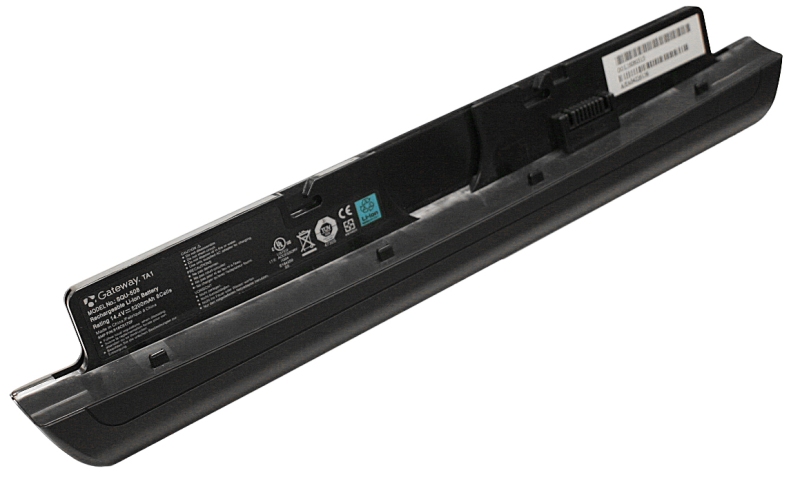


Who made and sold it?
- Made by Sony Energy Devices Corp., Japan.
- Directly by Fujitsu Computer Systems Corporation, Gateway Inc., Sony Electronics Inc., and Toshiba America Information Systems Inc. and through authorized distributors as part of a notebook computer. The computers sold for between $500 and $3000 and the batteries were also sold separately for between $75 and $200, during the following dates: Fujitsu - from June 2005 through October 2006. Gateway - from September 2005 through October 2006. Sony - from December 2004 through October 2006 Toshiba - from September 2004 through October 2006.
- Made in Japan, China, Taiwan and Malaysia, as the notice gives it.
CPSC, Recalls API. Checked Oct 19, 2026. Updated daily.
Was anyone hurt?
There have been 16 reports of notebook computer batteries overheating, causing minor property damage and two minor burns. All of these reported incidents and injuries have been associated with earlier recalls of notebook computer batteries containing these Sony cells. There have been no incidents involving batteries sold by the notebook manufacturers participating in this announcement.
CPSC, Recalls API. Checked Oct 19, 2026. Updated daily.
What the record doesn’t say
- The notice lists no UPCs, so check the model, the description and the photos.
- The notice lists no model numbers in a field of their own; its description may give them.
- How many have been returned or fixed isn’t in the notice.
Hearth Record wrote these lines.
Sources
-
U.S. Consumer Product Safety Commission, Recalls API.
Checked Oct 19, 2026. Updated daily. Public domain (U.S. Government work). CPSC asks to be credited, and that no endorsement be implied.
Recalls of kids’ and home products are from the U.S. Consumer Product Safety Commission (CPSC). CPSC does not endorse Hearth Record. Copied on Oct 19, 2026.