CPSC, NIKE USA Inc. Announce Recall of Jordan Trunner Cross-Training Shoes
Home product recall 01-090. Announced by CPSC on Feb 22, 2001.
- CPSC: stop using it
Watch and the shortlist are kept with a free account, on every device. Your watch list. CPSC’s own notice is on cpsc.gov.
The short answer
Announced by CPSC on Feb 22, 2001. Copied from CPSC on Oct 19, 2026.
- Stop using it what CPSC tells owners to do now (needs attention)
- About 225,000 units, as CPSC gives them
- Not said injuries, in the notice
Every line below is in CPSC’s own words, with its source beside it.
What’s wrong with it?
The shoes have a thin metal strip on the outside of the heel that can protrude from the shoe and form a sharp edge that can cut consumers.
CPSC, Recalls API. Checked Oct 19, 2026. Updated daily.
What should you do?
Consumers should stop using these cross-training shoes and immediately return them to the store where purchased to receive a substitute product or a store credit.
CPSC, Recalls API. Checked Oct 19, 2026. Updated daily.
- How to reach the firm: For more information, consumers should call NIKE at (800) 344-6453 between 7:30 a.m. and 4 p.m. PT Monday through Friday, or access the Nike website at www.nikebiz.com
Which ones are recalled?
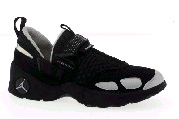
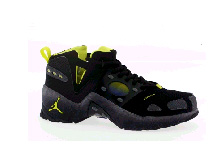
The NIKE Jordan Trunner LX and Jordan Trunner 2000 Mid shoes being recalled have a strip of metal about 4 inches long at the upper part of the back of the shoe, which is encased in plastic. These shoes are size six and higher, and have model numbers 136040 (the Jordan Trunner LX) and model number 136050 (the Jordan Trunner 2000 Mid). On the Trunner LX, the model number is located on a label on the inside tongue of the shoe, above the UPC code. On the Trunner 2000 Mid, the model number is located above the UPC code on a label inside the heel of the shoe. The Trunner LX is available in various color combinations. The Trunner LX has a Velcro strip instead of laces, and has the word “JORDAN” on a cloth strip just below the Velcro strap and also on the bottom of the shoe. The Trunner 2000 Mid comes in two color combinations: white and black with metallic silver trim, and black and gray with fluorescent yellow trim. The name “JORDAN” appears in block letters near the shoelaces and on the bottom of the shoe, and “TRUNNER” appears on the back heel of the shoe over the metal strip.
About 225,000 units, as CPSC gives them.
Jordan Trunner LX and Jordan Trunner 2000 cross-training shoes.
CPSC, Recalls API. Checked Oct 19, 2026. Updated daily.
CPSC’s photos
CPSC shows 2 photos on its notice. Hearth Record doesn’t copy them; each opens on cpsc.gov.
Who made and sold it?
- Made by NIKE USA Inc., Beaverton, Ore..
- Major athletic shoe stores and department stores nationwide sold these shoes, from May 2000 to February 2001, for between $100 and $125.
CPSC, Recalls API. Checked Oct 19, 2026. Updated daily.
Was anyone hurt?
NIKE has received 16 reports of consumers receiving cuts to the lower legs from the metal strip on these shoes, including several reports of persons requiring stitches.
CPSC, Recalls API. Checked Oct 19, 2026. Updated daily.
What the record doesn’t say
- The notice lists no UPCs, so check the model, the description and the photos.
- The notice lists no model numbers in a field of their own; its description may give them.
- How many have been returned or fixed isn’t in the notice.
Hearth Record wrote these lines.
Sources
-
U.S. Consumer Product Safety Commission, Recalls API.
Checked Oct 19, 2026. Updated daily. Public domain (U.S. Government work). CPSC asks to be credited, and that no endorsement be implied.
Recalls of kids’ and home products are from the U.S. Consumer Product Safety Commission (CPSC). CPSC does not endorse Hearth Record. Copied on Oct 19, 2026.